
Marian Flowers for Catholic Brides: What Renaissance Paintings Meant
Planning a Catholic wedding? The flowers you choose can carry a deeper meaning. In Christian art, roses, white lilies, irises, carnations, and olive branches have all been used to express aspects of the Virgin Mary's purity, love, and queenship. These historic Marian flower symbols offer Catholic brides a beautiful source of inspiration for wedding bouquets and stationery.
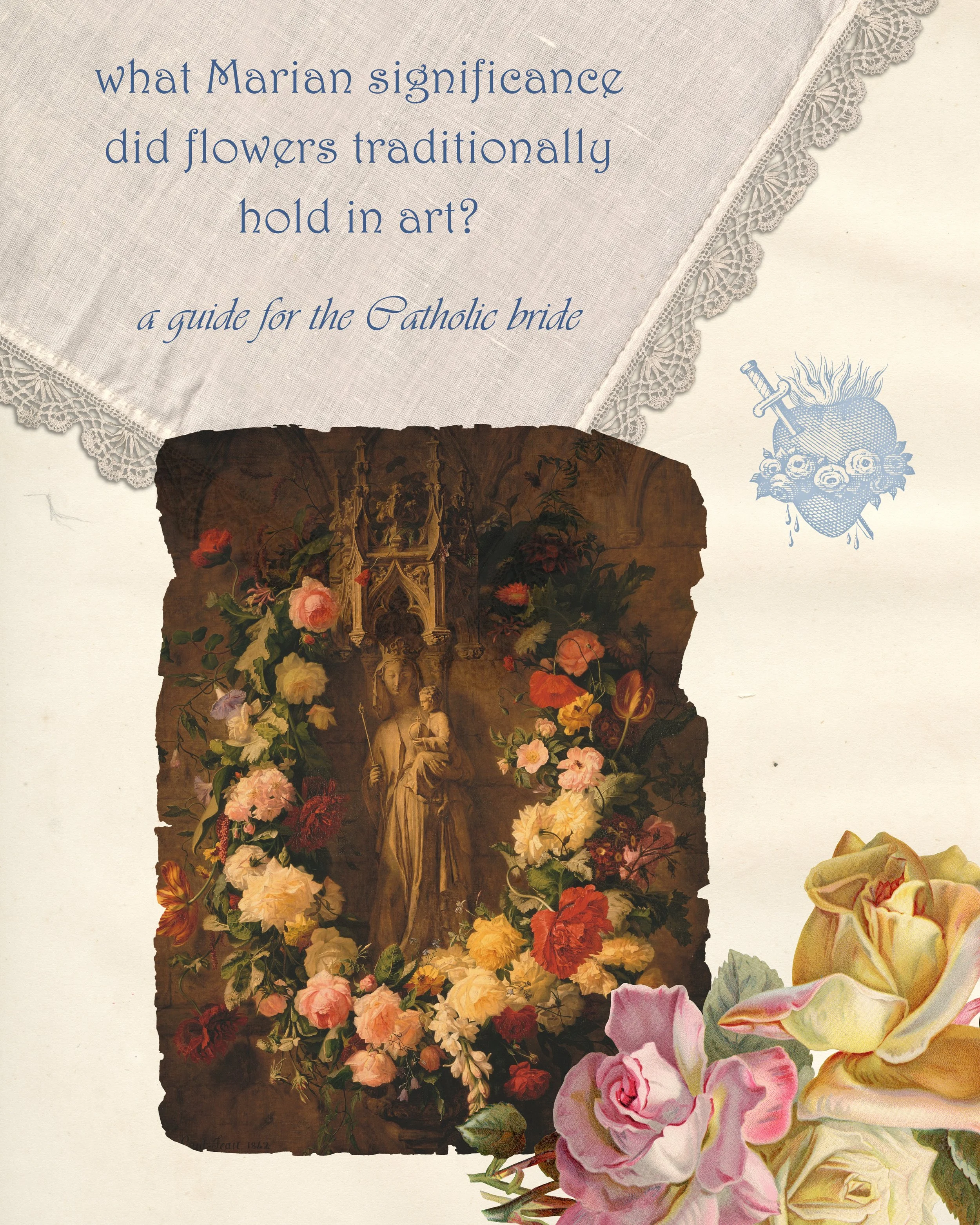
For Catholic brides, these traditions can offer a meaningful starting point for choosing flowers, colors, and stationery. Here’s a guide to five of the most important Marian flowers in art.
A note on sources: The meanings below come from Elizabeth Haig’s The Floral Symbolism of the Great Masters (1913), a book describing artistic conventions, mostly from the 14th and 15th centuries. These are traditions in art, not official Church teaching, and they varied by painter, region, and century.
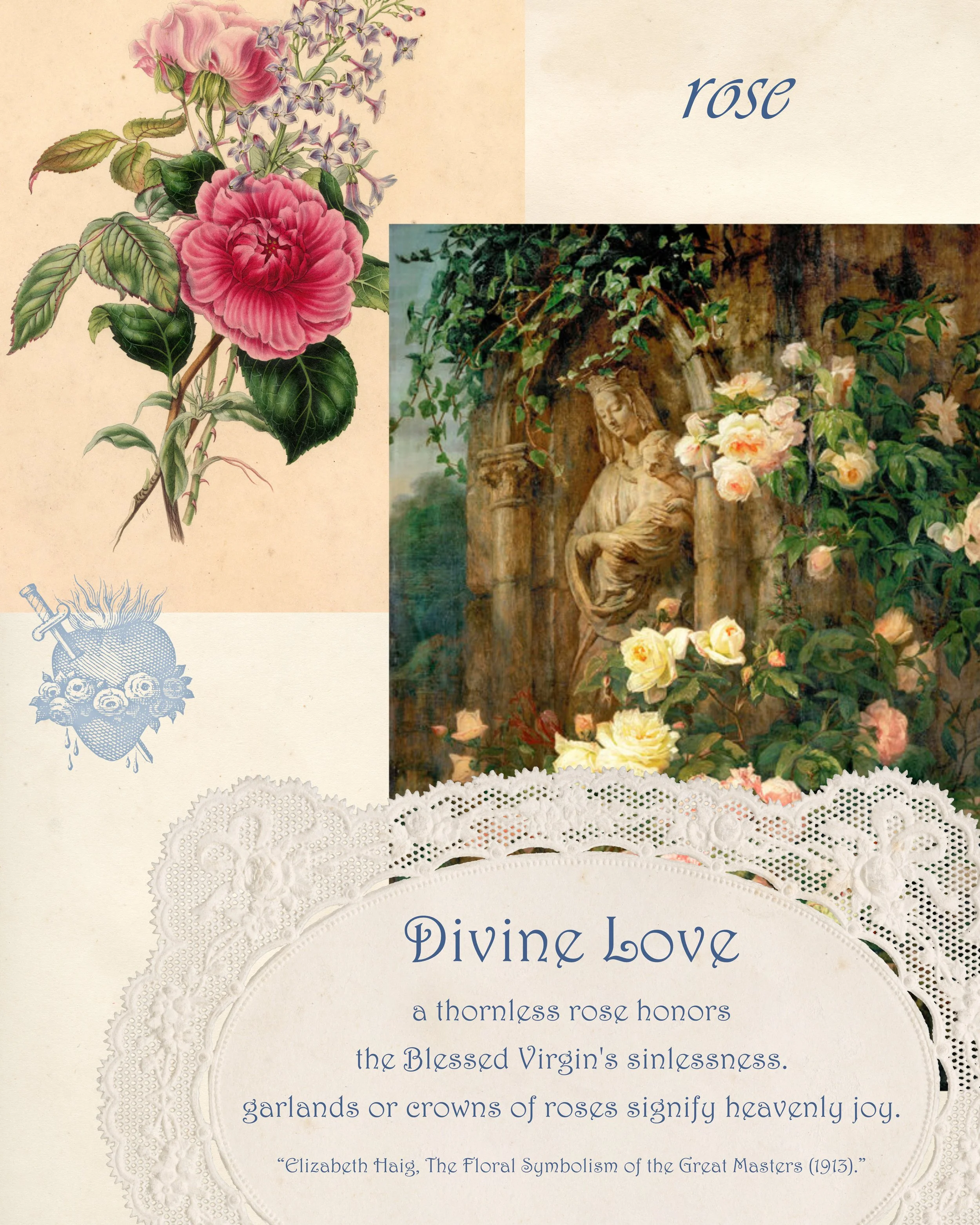
The Rose: Divine Love
The rose was one of the most important flowers in Marian art. In the paintings Haig describes, a single rose often stood for divine love, and roses falling from heaven symbolized God’s love. The Virgin was also linked to the title Rosa Mystica (Mystical Rose), and a rose without thorns was used to honor her sinlessness. This was the inspiration for one of our signature semi-custom wedding suites: the Rosa Mystica
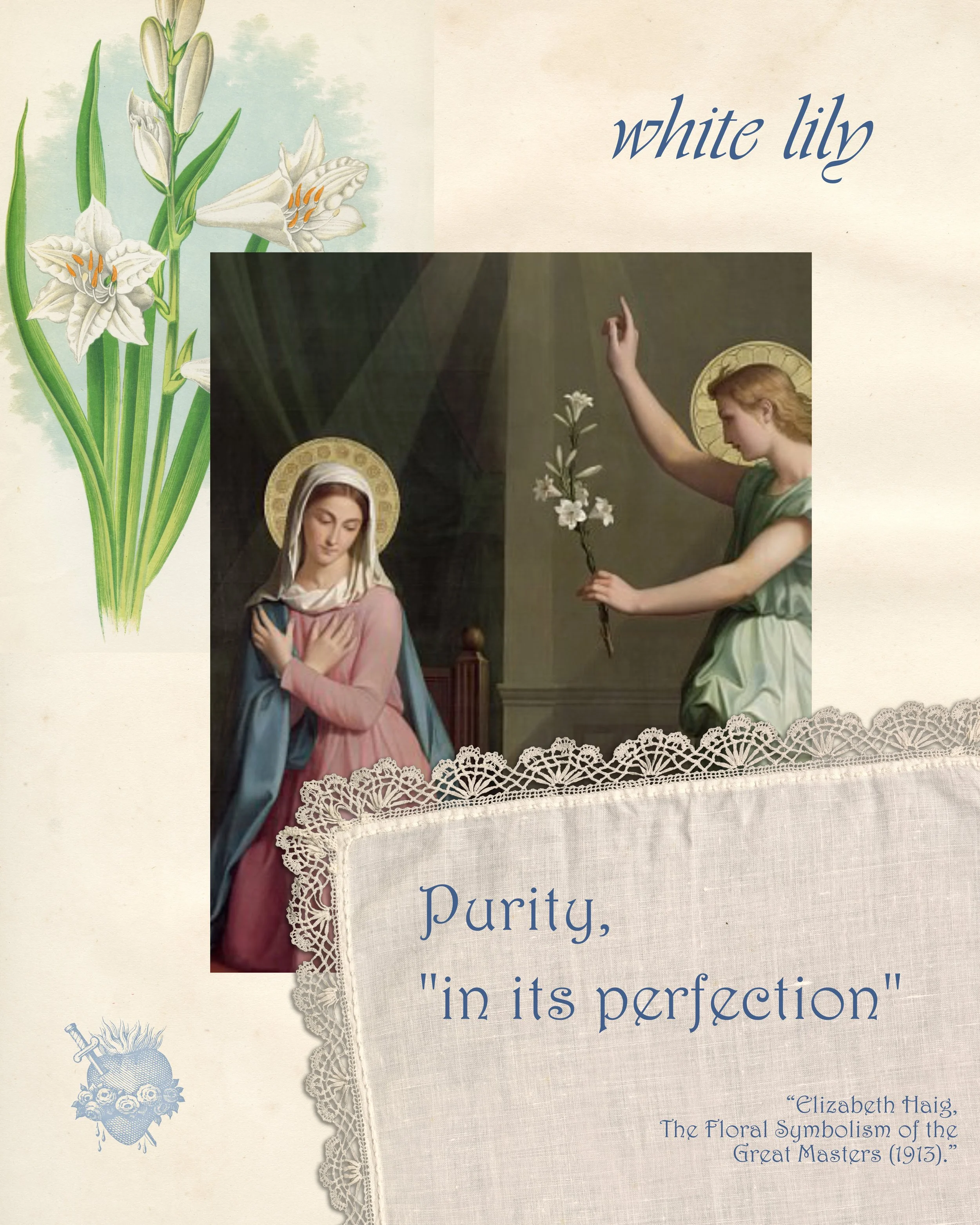
The White Lily: Purity
The white lily was the flower most closely tied to the Virgin. Haig describes it as the symbol of purity “in its perfection.” In Annunciation paintings, the angel Gabriel often holds a lily, a detail that became so common it was almost his identifying mark.
The Iris: The Royal Lily
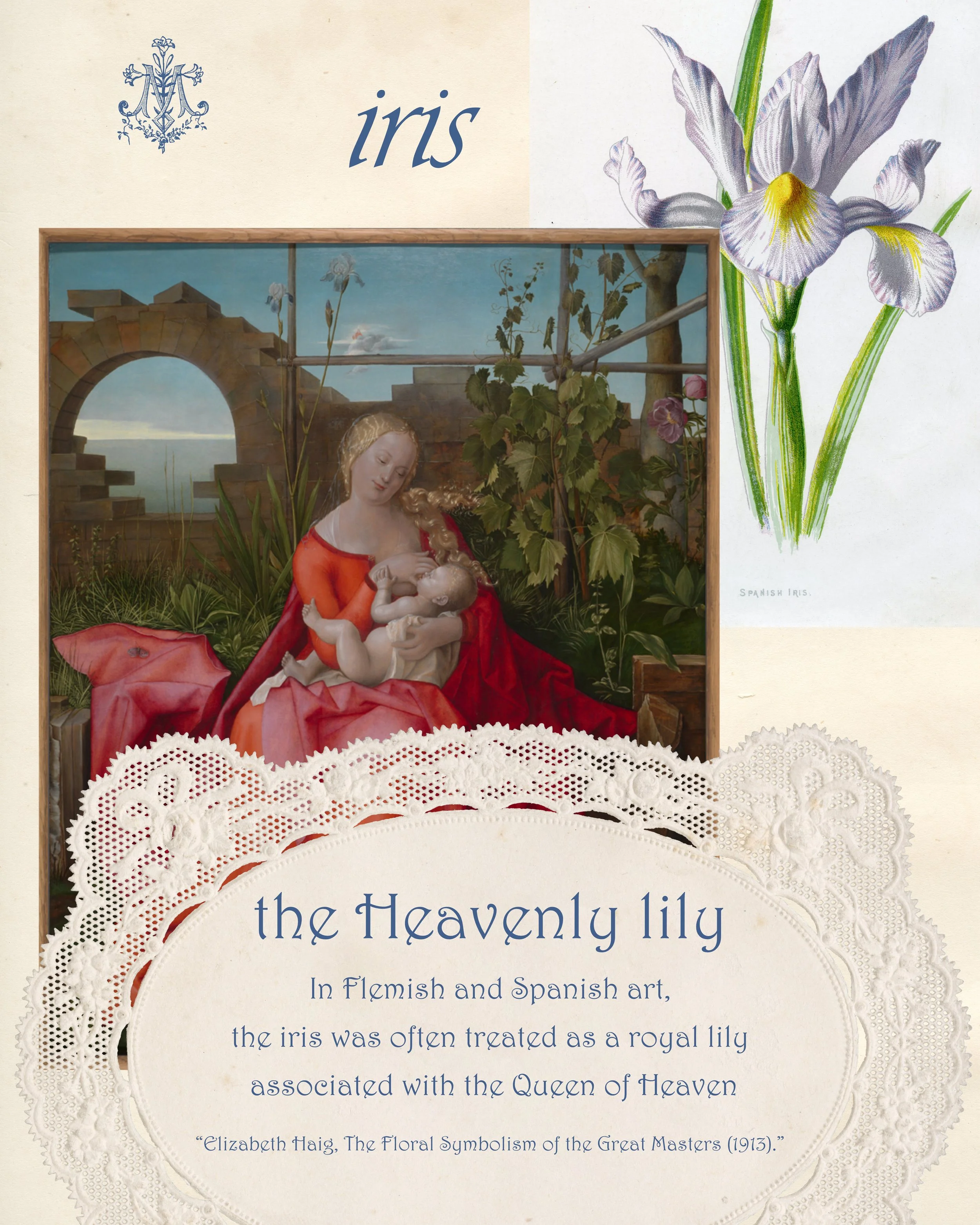
The iris was the white lily’s rival in Marian art. Although it isn’t botanically a lily, its sword-shaped leaves and French association with the fleur-de-lys linked it to royalty. In Flemish and Spanish paintings, the iris was often treated as the Queen of Heaven’s flower. In Spanish Immaculate Conception scenes, it was sometimes the only flower shown.
The Carnation: Like the Rose
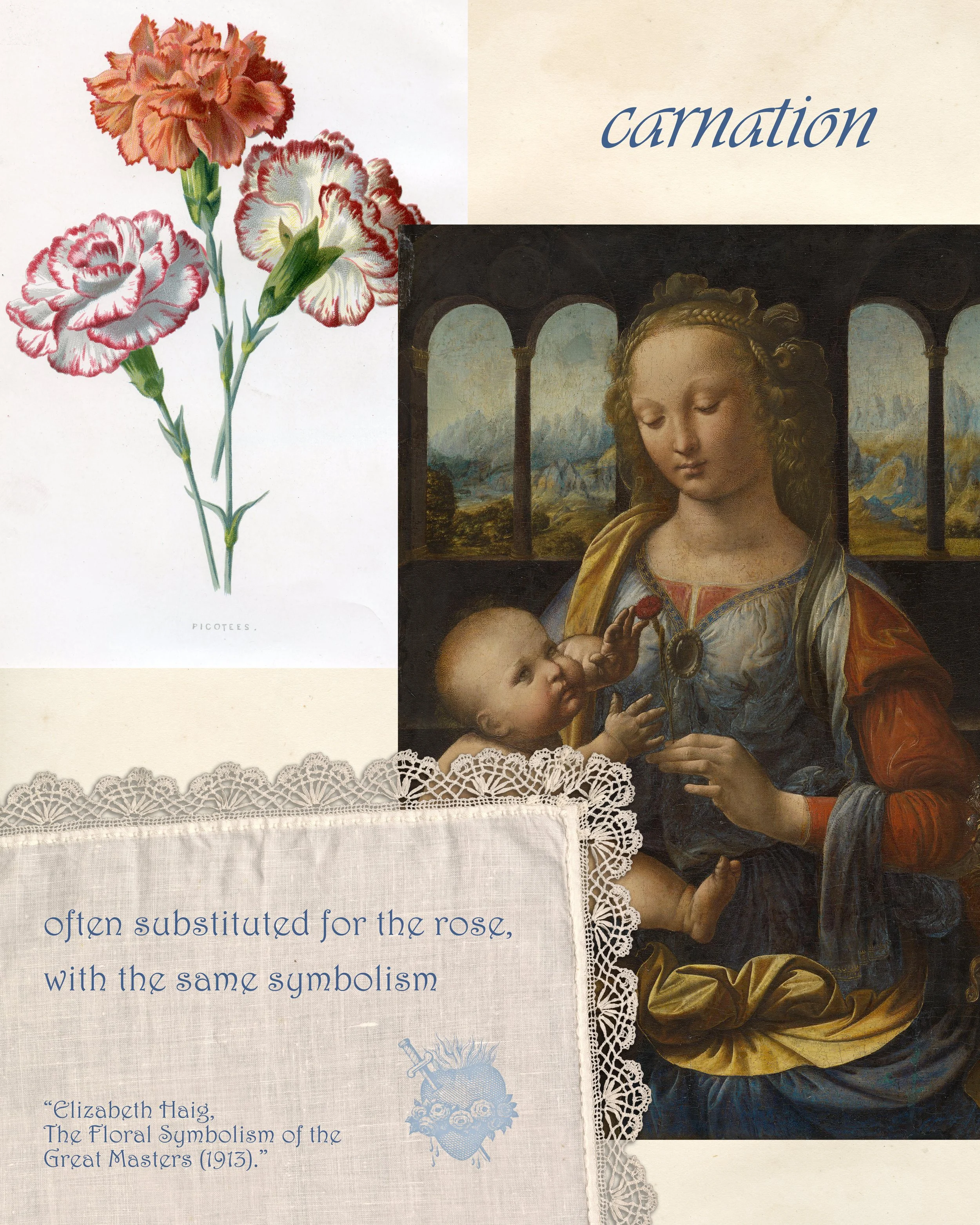
The carnation, or pink, carried the same meaning as the rose, divine love. Artists often used it when they didn’t want to paint roses. In Venice, where roses were scarce but pinks grew on balconies, painters used the flower they saw every day. Haig also notes that Northern painters preferred its neat shape and bright color.
The Olive: Peace and Reconciliation
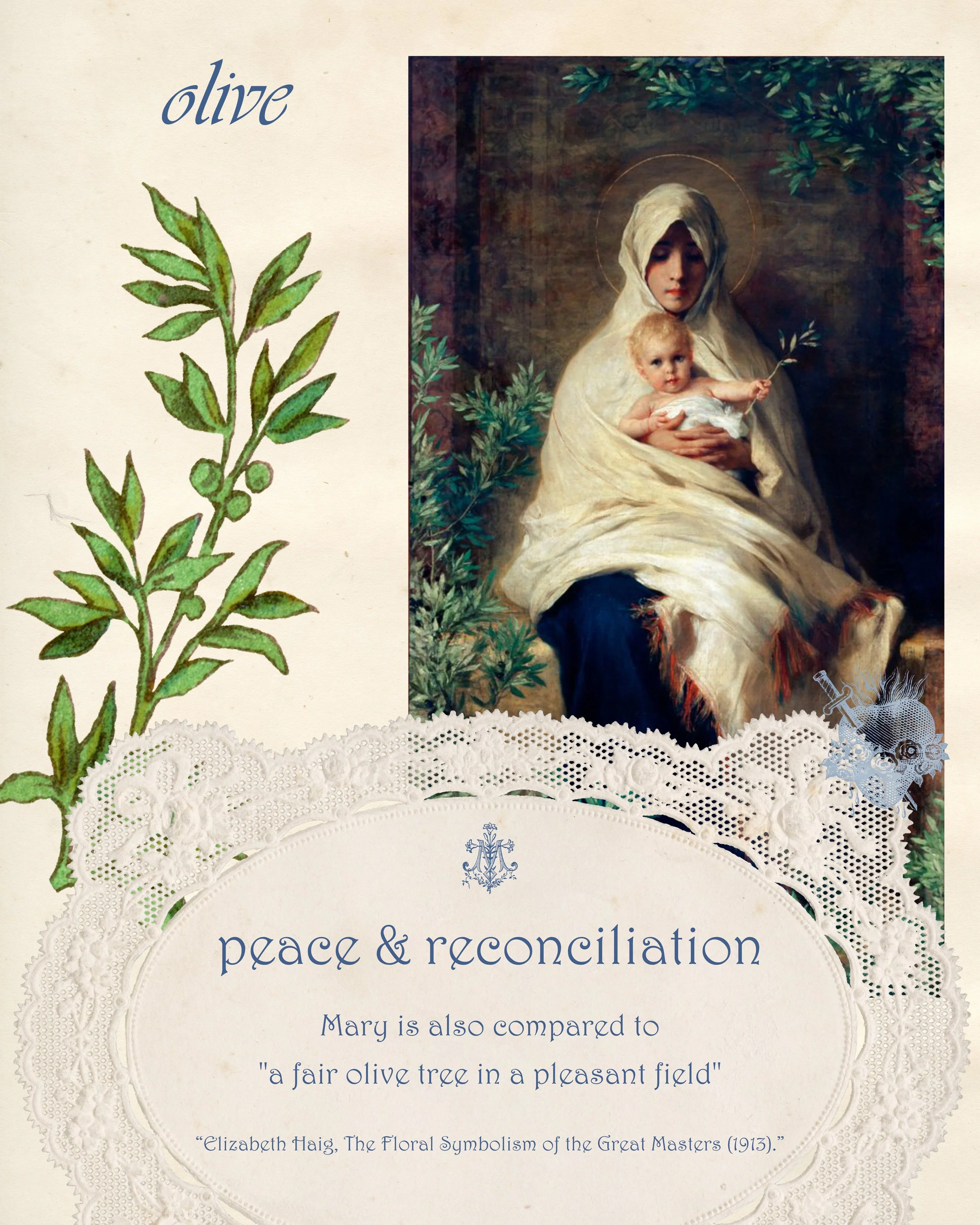
The olive branch was the symbol of peace. Gabriel often carried one in Sienese paintings, announcing a message of peace and reconciliation. Mary was also compared to “a fair olive tree in a pleasant field,” a verse from Ecclesiasticus that the Church applied to her.
Ready to Plan Your Stationery?
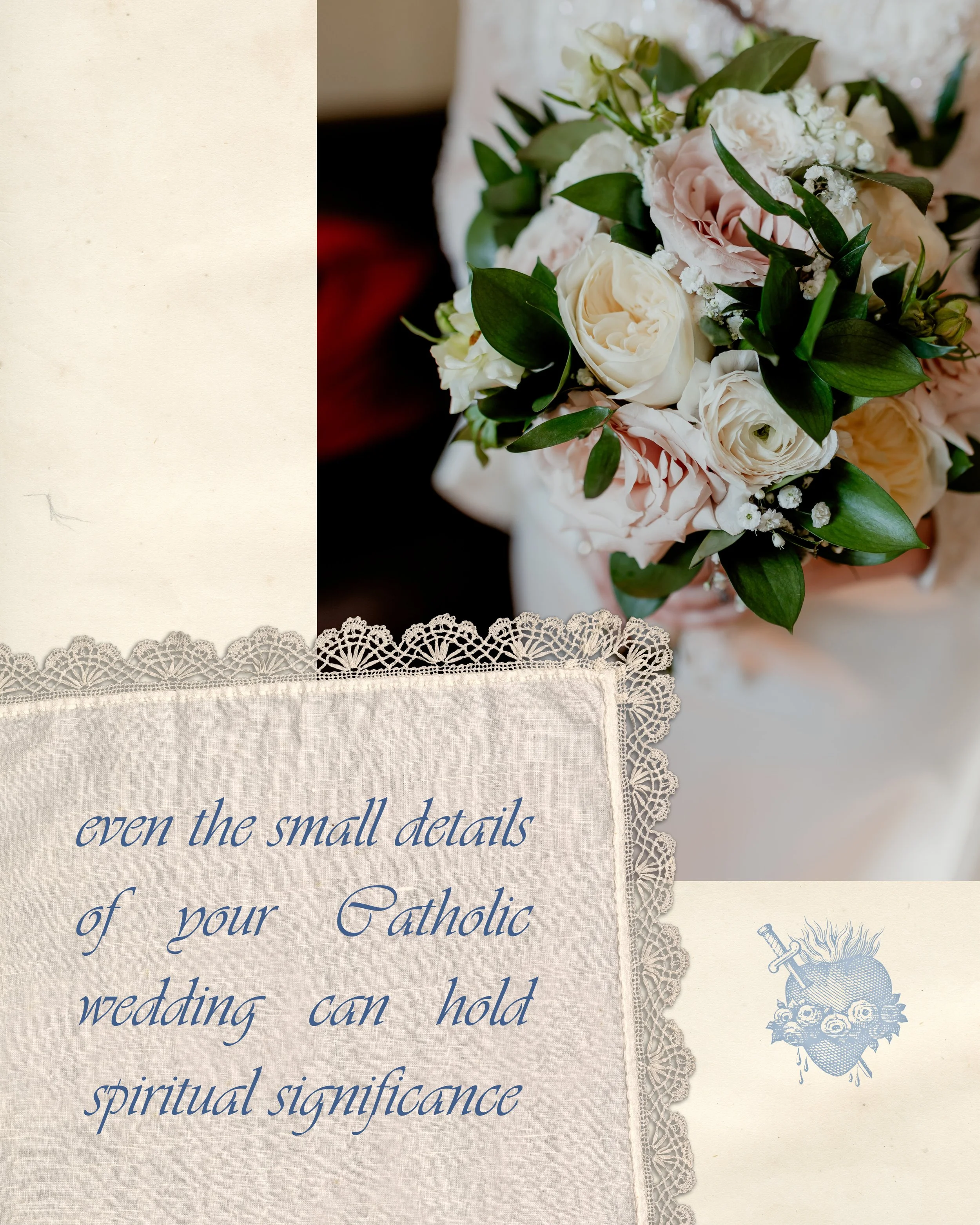
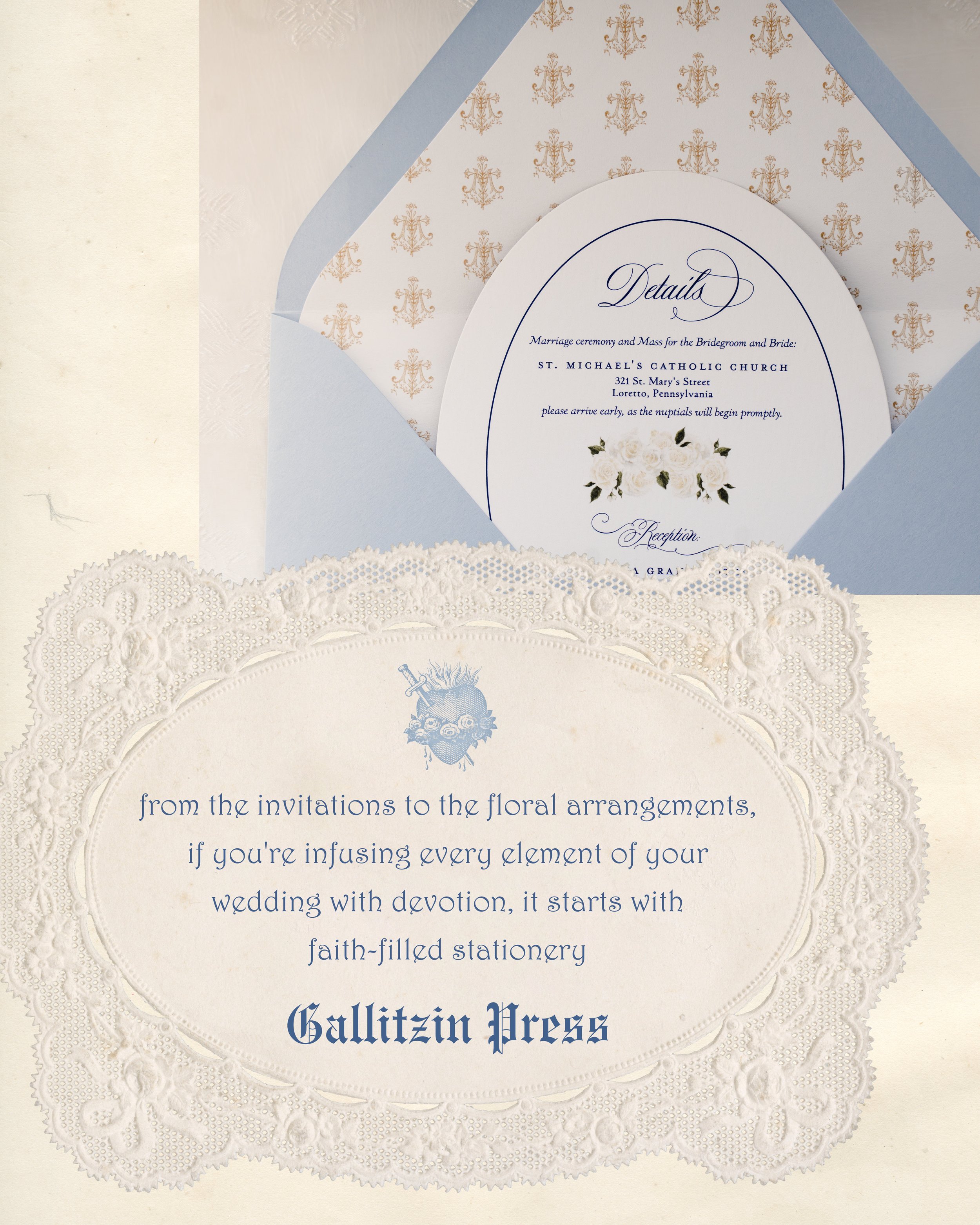
The small details of a Catholic wedding can hold spiritual significance, from the first invitation to the thank-you note. If you’d like invitations that reflect your faith and your chosen flowers, the fully-custom wedding stationery experience would be perfect for you!
-
No. They are artistic conventions. Painters used them to help viewers understand a scene, and the meanings shifted over time and between regions. They are best described as traditions in Christian art, not doctrine.
-
Elizabeth Haig’s The Floral Symbolism of the Great Masters (1913) is in the public domain and available free from Project Gutenberg. It covers the flowers in this guide in detail, with examples from individual paintings.
-
That depends on your style and tradition. The white lily is the most direct link to Mary’s purity, while the rose suggests divine love. Many brides combine a few, or choose one flower for the bouquet and another for stationery.
-
Yes. Flowers are a personal choice. The symbolism can be a meaningful detail even if it isn’t the central theme of your wedding.
-
No. Haig notes that the Virgin’s flowers were often white or blue, but the rose was a major exception, and red and pink roses were common in Florentine art. Color can follow your taste.
-
Our fully custom experience would be perfect for a bride with her heart seat on carrying a specific floral motif throughout her engagement, wedding and reception!
-
Consider incorporating roses, white lilies, or irises into your bridal bouquet as a beautiful reminder of the Blessed Virgin Mary. Roses can evoke Our Lady's queenship, white lilies her purity, and irises her sorrows. You might choose flowers that reflect a particular Marian devotion or feast day that holds special meaning for you and your future husband.
-
Many Catholic couples choose to honor Our Lady as part of their wedding celebrations. Marian flowers, such as roses and white lilies, can be incorporated into appropriate church floral arrangements, depending on your parish's customs and the liturgical season. You might also consider a Marian hymn or prayer as part of a devotion approved by your priest and permitted by your parish's wedding liturgy guidelines.
-
If you have a particular devotion to the Blessed Virgin Mary, let it inspire your wedding flowers. Roses may recall Our Lady's queenship and the Holy Rosary, while white lilies have a longstanding association with her purity. You could also draw inspiration from the title under which you especially honor her, whether Our Lady of the Rosary, the Immaculate Conception, or another Marian devotion.
-
Your wedding invitations can reflect your devotion to Our Lady before guests even arrive at the church. Consider floral artwork inspired by historic depictions of Marian roses, lilies, or other symbolic flowers, paired with sacred imagery and traditional typography. At Gallitzin Press, historical Catholic art offers inspiration for stationery that reflects the faith at the heart of your wedding day.
-
Yes. The season in which you marry can be a meaningful source of inspiration for your floral choices. Spring flowers might complement a wedding near an important Marian feast, while roses may be especially fitting for a couple devoted to the Rosary. Consult your florist and parish about seasonal availability, church customs, and any restrictions on floral arrangements during the liturgy.
