
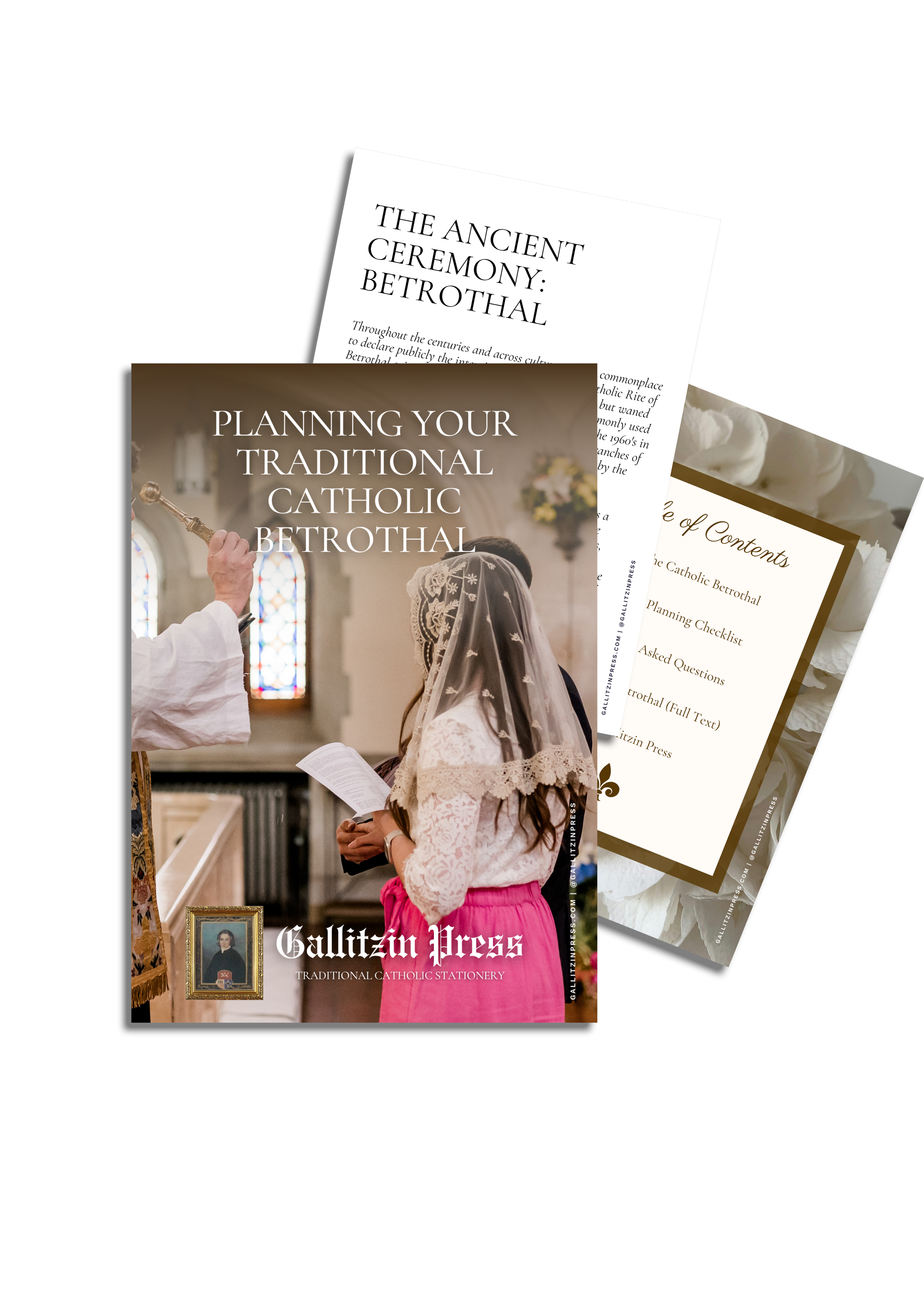
Download the Free Catholic Betrothal Guide
An 18-page guide to the Rite of Betrothal, planning your ceremony, inviting your loved ones, and preparing for marriage.

What is the Catholic Rite of Betrothal?
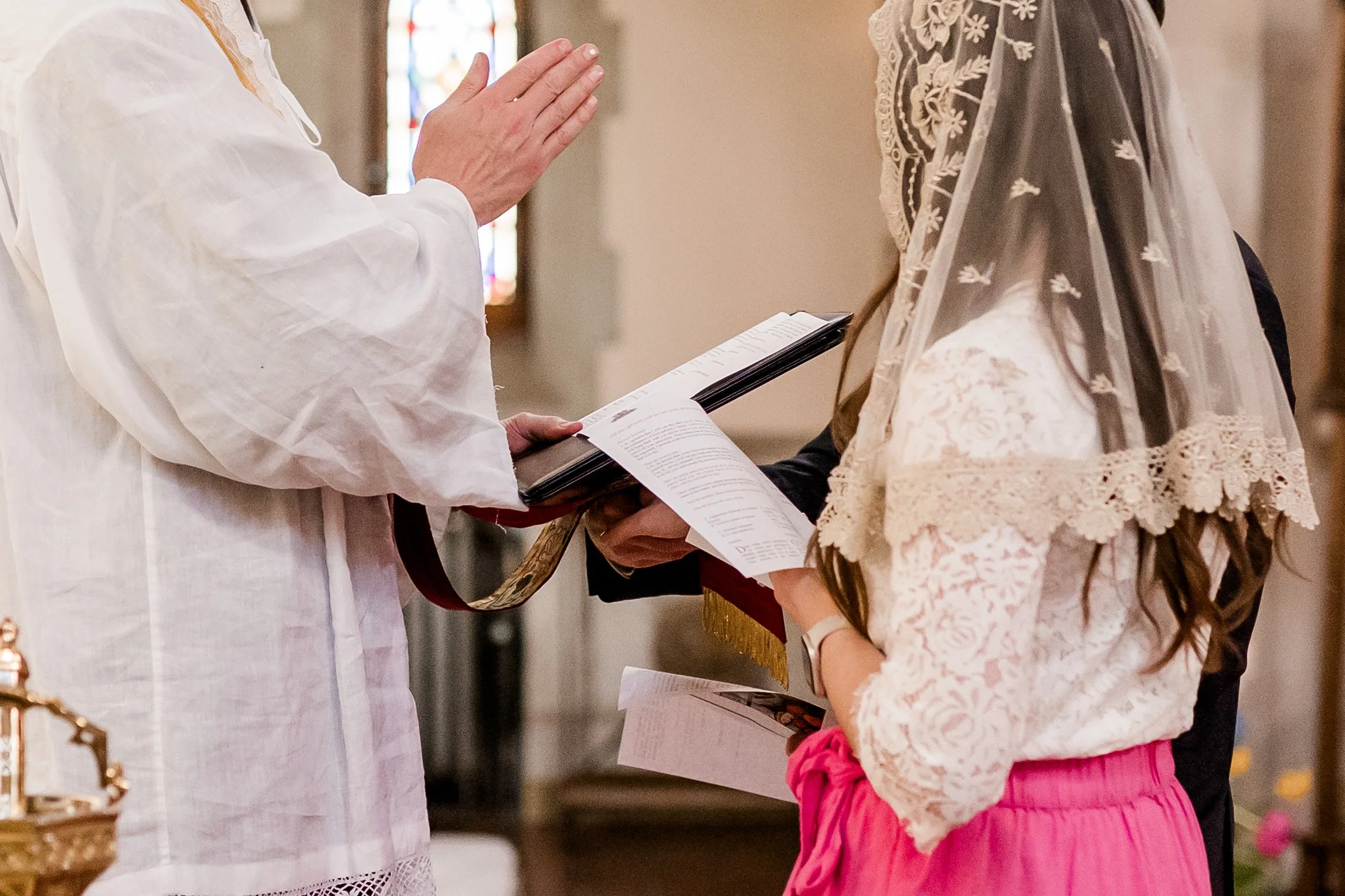
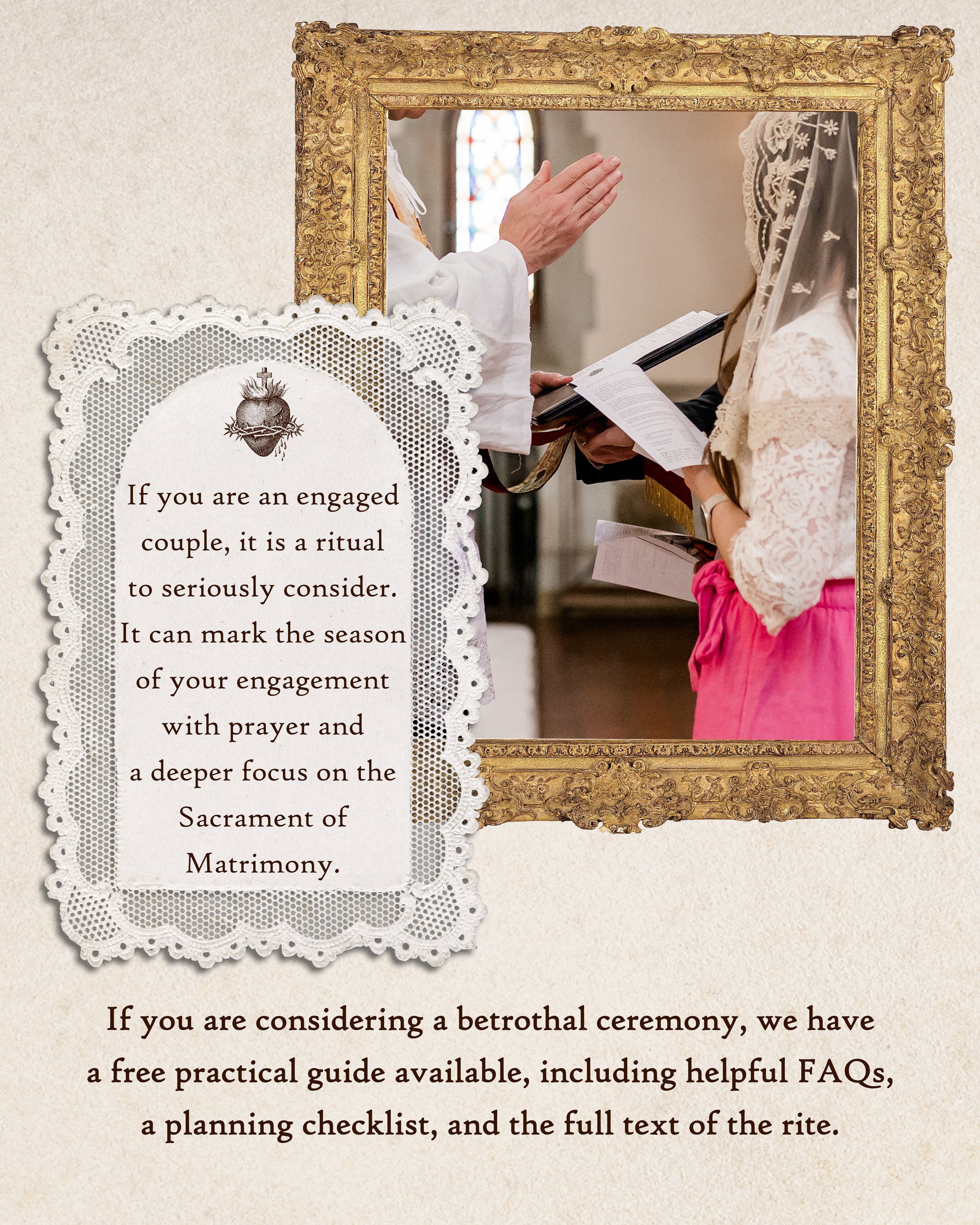
Have you heard of this ancient Catholic tradition for engaged couples? This rite has increased in frequency as couples discover it and wish to include it as a prayerful occasion in their time of engagement. In past times, this ceremony legally bound a couple to be married at a future date. While it no longer holds the same legal standing, the couple publicly declares their intent to marry.
The man states: “In the name of our Lord, I, N.N., promise that I will one day take you, N.N., for my wife, according to the ordinances of God and Holy Church. I will love you as I love myself. I will keep faith with you and be loyal to you. And so aid you and comfort you in all your necessities…”
The woman also makes a statement of similar sentiment. The engagement ring is blessed, becoming a sacramental. From the graces of the rite, setting aside time for prayer, and inviting close friends and family, having a betrothal can help sanctify your marriage preparations and be a witness to your loved ones.
Because this can be such a grace filled occasion, we have prepared a FREE planning guide!
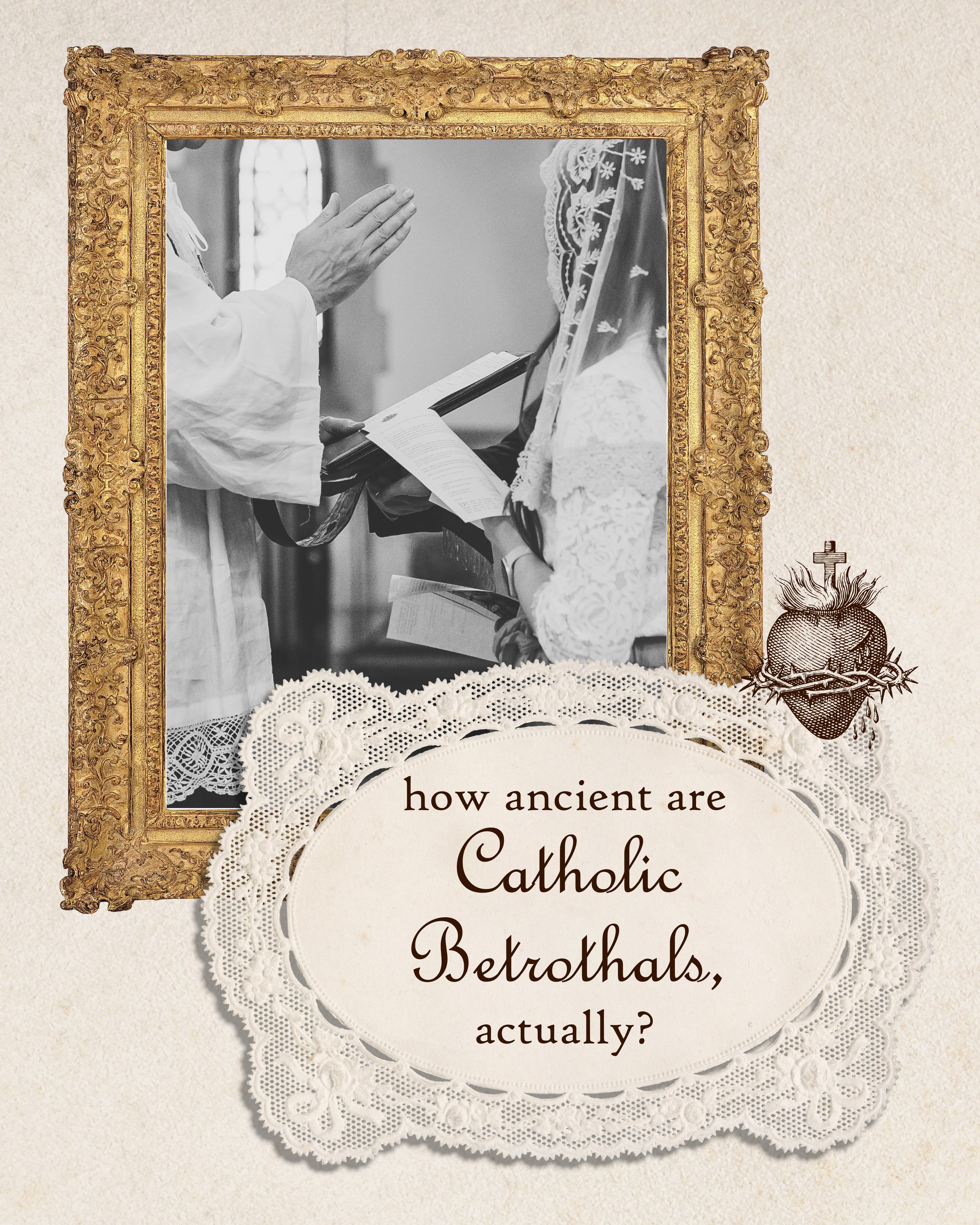
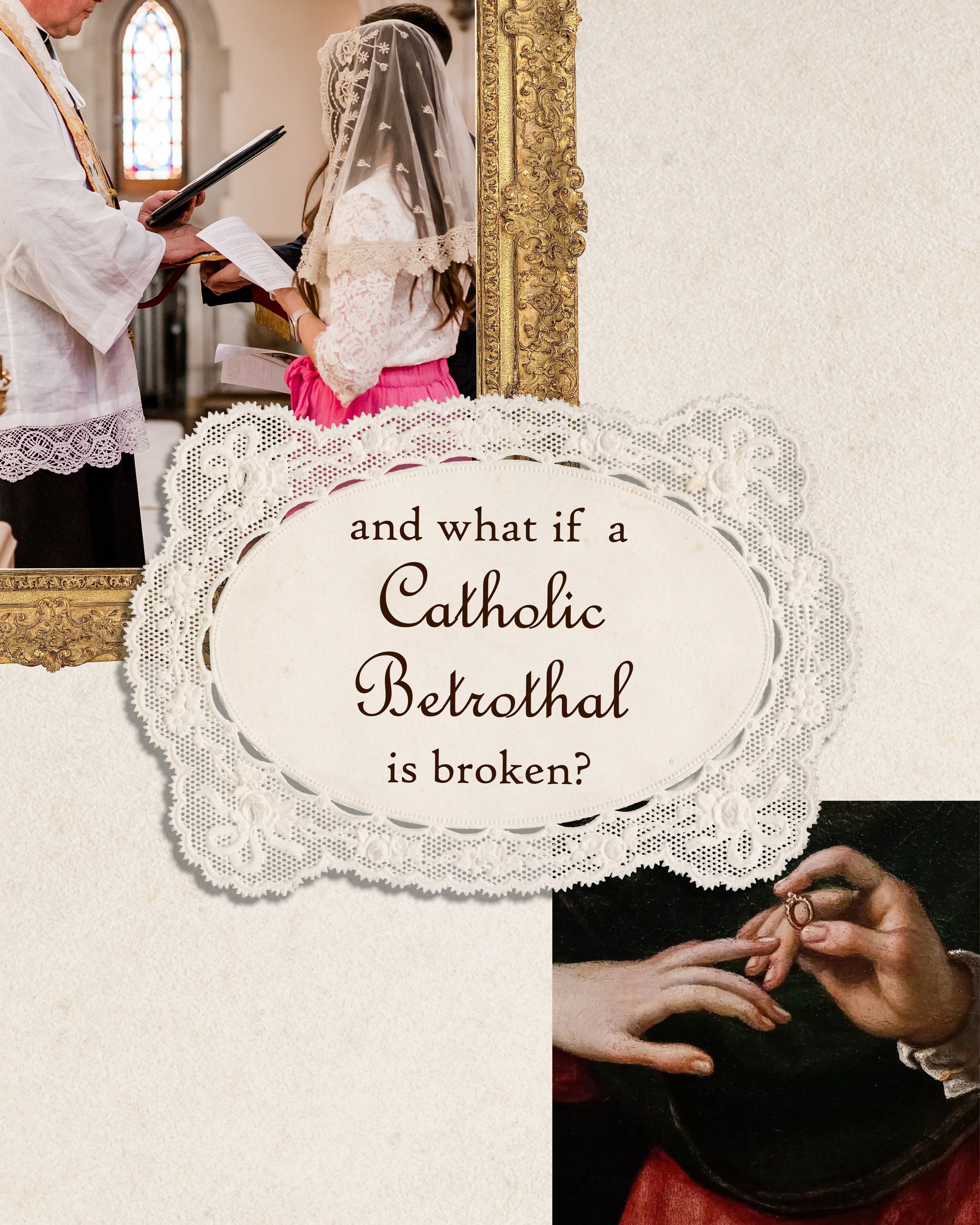
How ancient are Catholic Betrothals, actually? What does it mean for couples today?
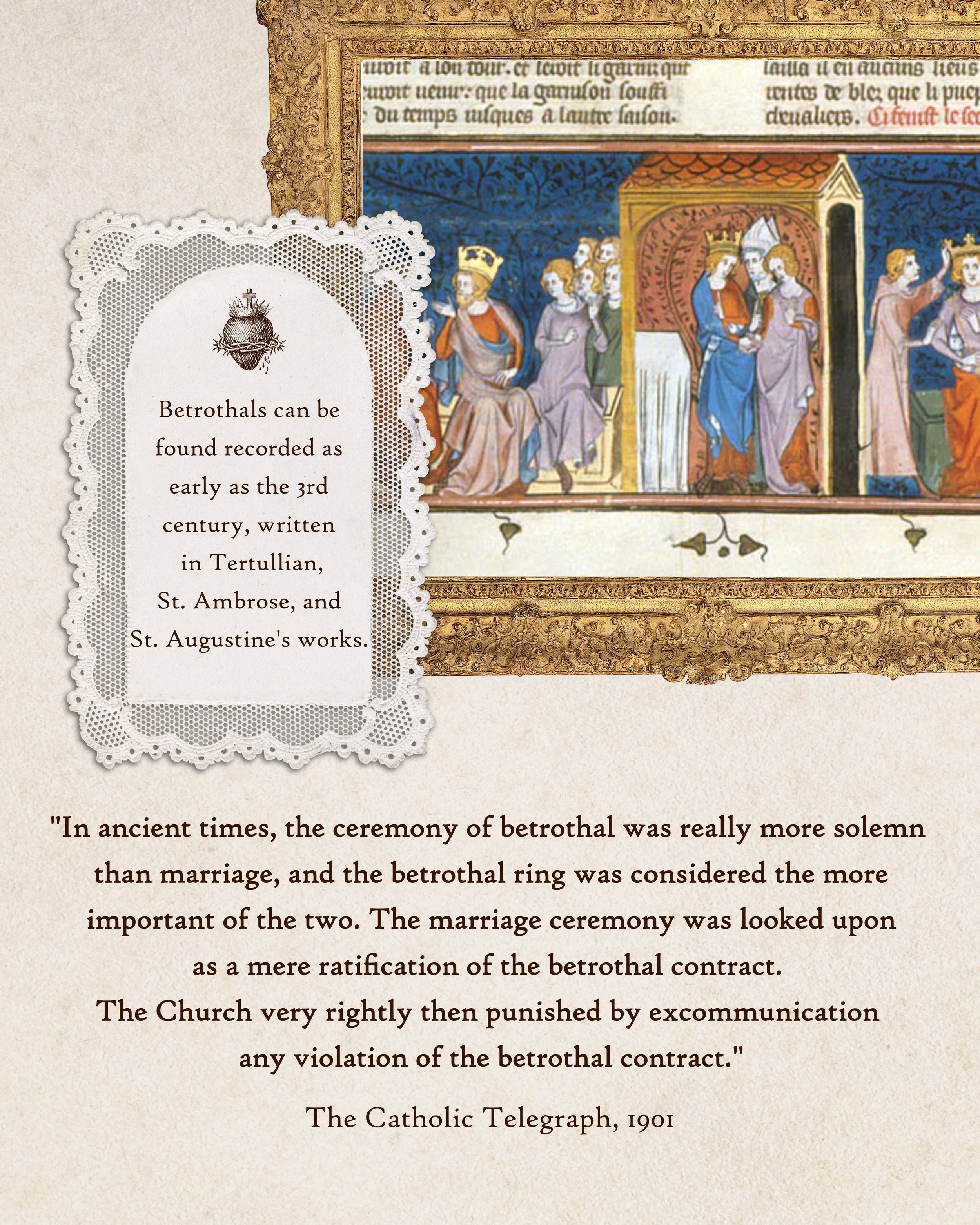
Betrothals can be found recorded as early as the 3rd century, written in Tertullian, St. Ambrose, and St. Augustine’s works.
"In ancient times, the ceremony of betrothal was really more solemn than marriage, and the betrothal ring was considered the more important of the two. The marriage ceremony was looked upon as a mere ratification of the betrothal contract. The Church very rightly then punished by excommunication any violation of the betrothal contract" (The Catholic Telegraph, 1901).
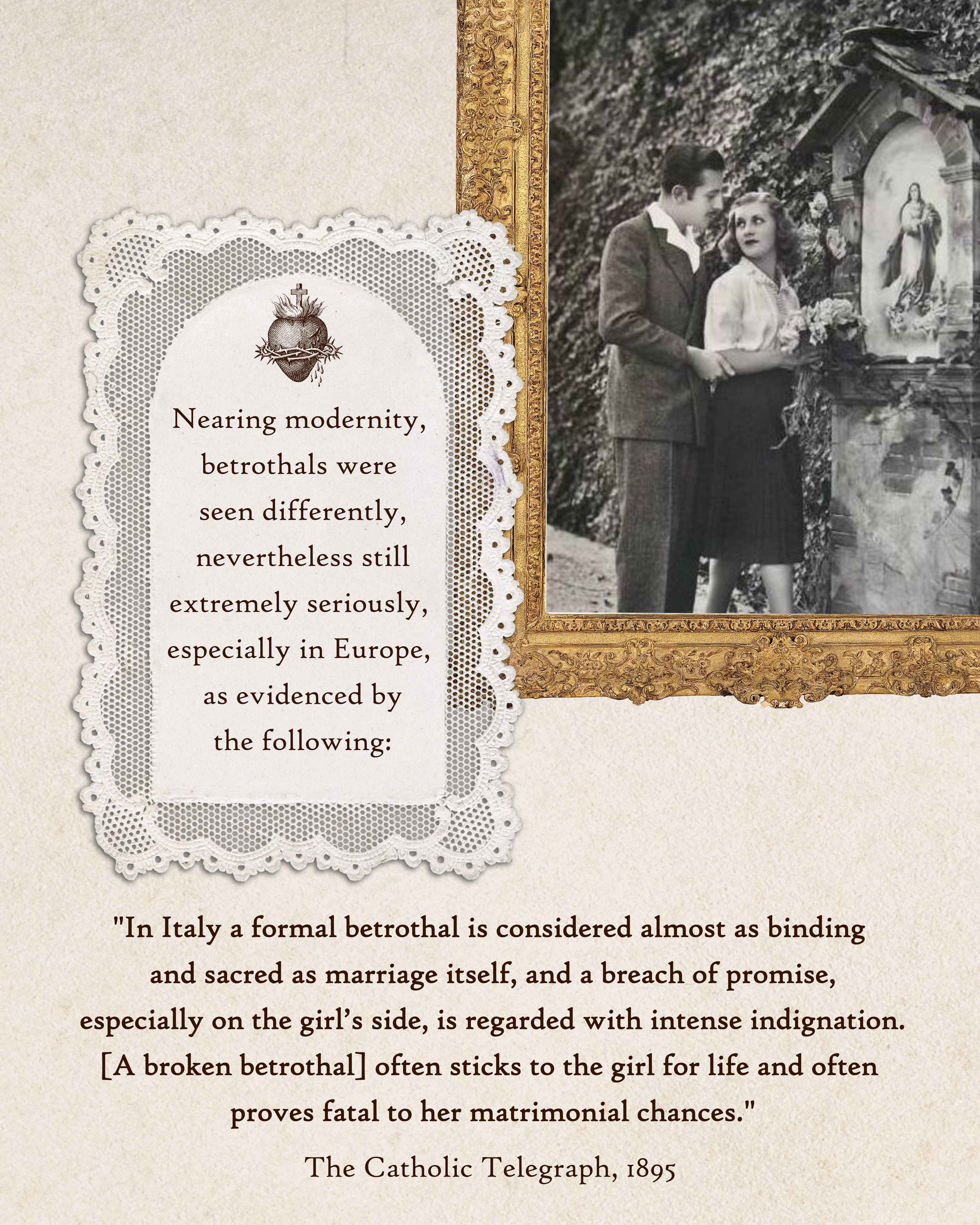
Nearing modernity, betrothals were seen differently, nevertheless still extremely seriously, especially in Europe, as evidenced by the following:
“In Italy a formal betrothal is considered almost as binding and sacred as marriage itself, and a breach of promise, especially on the girl’s side, is regarded with intense indignation. [A broken betrothal] often sticks to the girl for life and often proves fatal to her matrimonial chances" (The Catholic Telegraph, 1895).
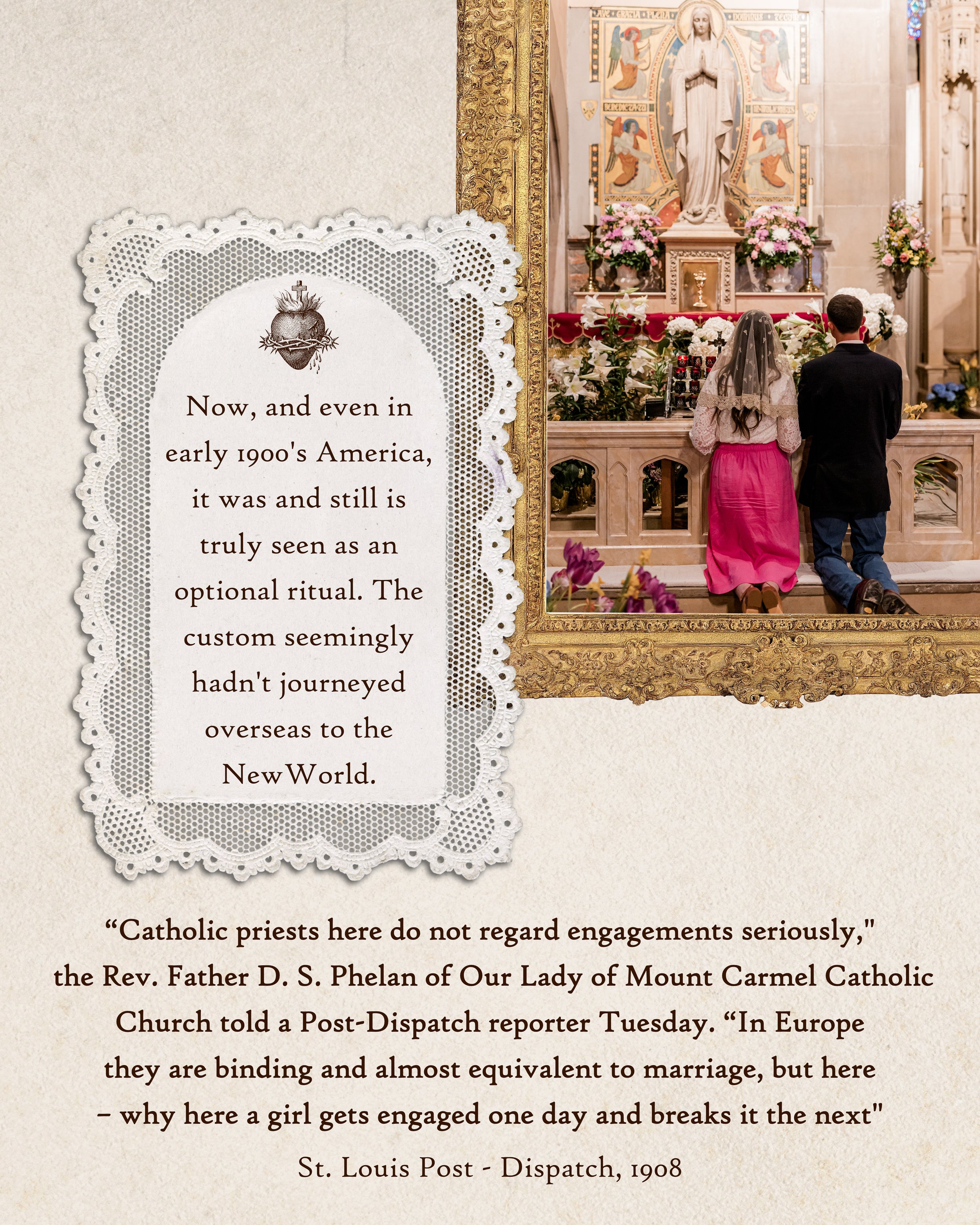
Now, and even in early 1900s America, it was and still is seen as a truly optional ritual. It seems the custom did not journey overseas to the New World.
“Catholic priests here do not regard engagements seriously," the Rev. Father D. S. Phelan of Our Lady of Mount Carmel Catholic Church told a Post-Dispatch reporter in 1908 . “In Europe they are binding and almost equivalent to marriage, but here – why here a girl gets engaged one day and breaks it the next."
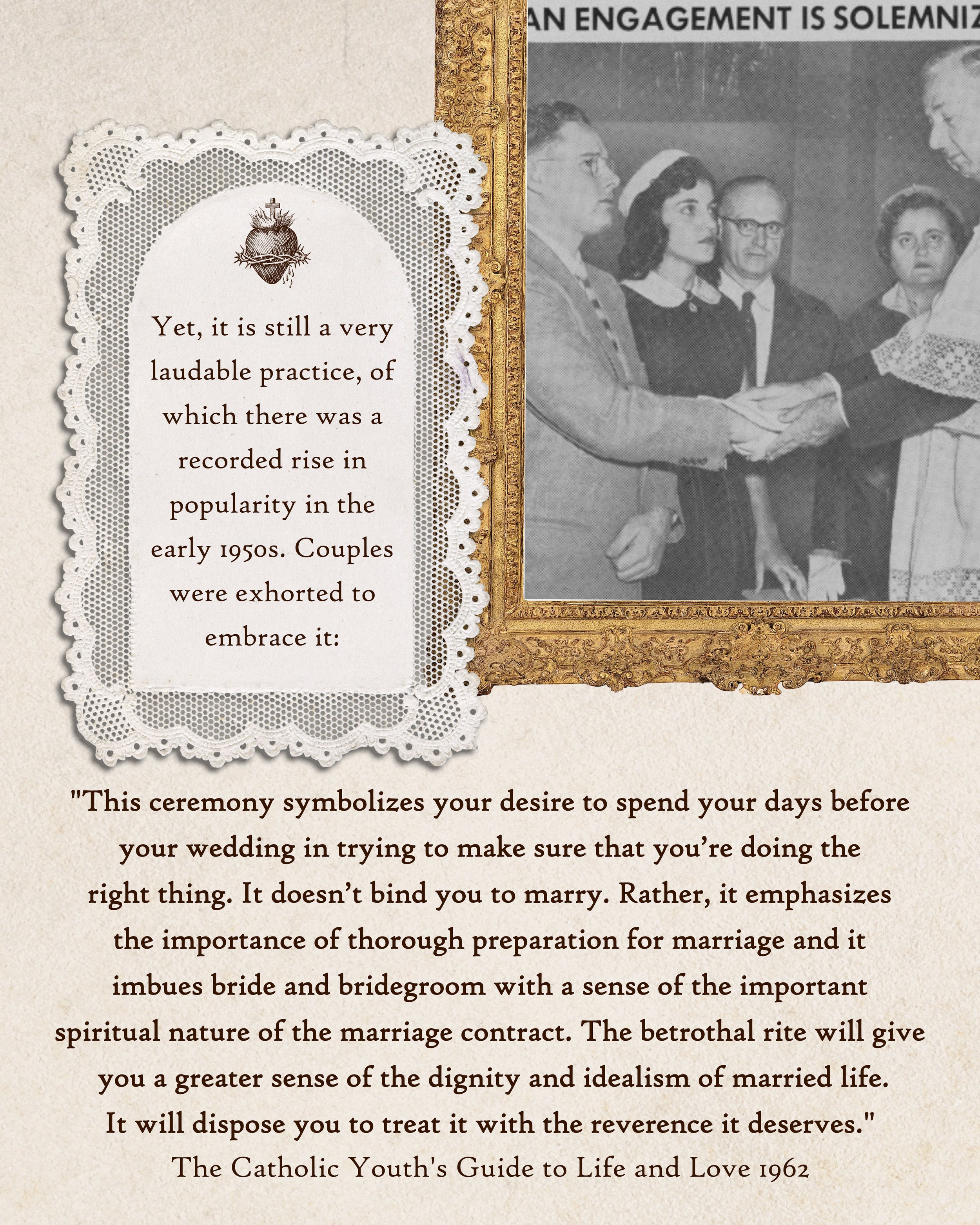
Yet, it is still a very laudable practice, of which was seen a rise in popularity first during the World Wars, then in early 1950s America. Couples were exhorted to embrace it, as seen in The Catholic Youth’s Guide to Love and Life:
"This ceremony symbolizes your desire to spend your days before your wedding in trying to make sure that you’re doing the right thing. It doesn’t bind you to marry. Rather, it emphasizes the importance of thorough preparation for marriage and it imbues bride and bridegroom with a sense of the important spiritual nature of the marriage contract. The betrothal rite will give you a greater sense of the dignity and idealism of married life. It will dispose you to treat it with the reverence it deserves."
If you are an engaged couple, it is a ritual to seriously consider. It can mark the season of your engagement with prayer and a deeper focus on the Sacrament of Matrimony.
For this content, I owe much gratitude to the extraordinary research of my friend Sharon Kabel of latinmassweddings.com
Download the Free Catholic Betrothal Guide
An 18-page guide to the Rite of Betrothal, planning your ceremony, inviting your loved ones, and preparing for marriage.